I left Cuba 62 Years Ago
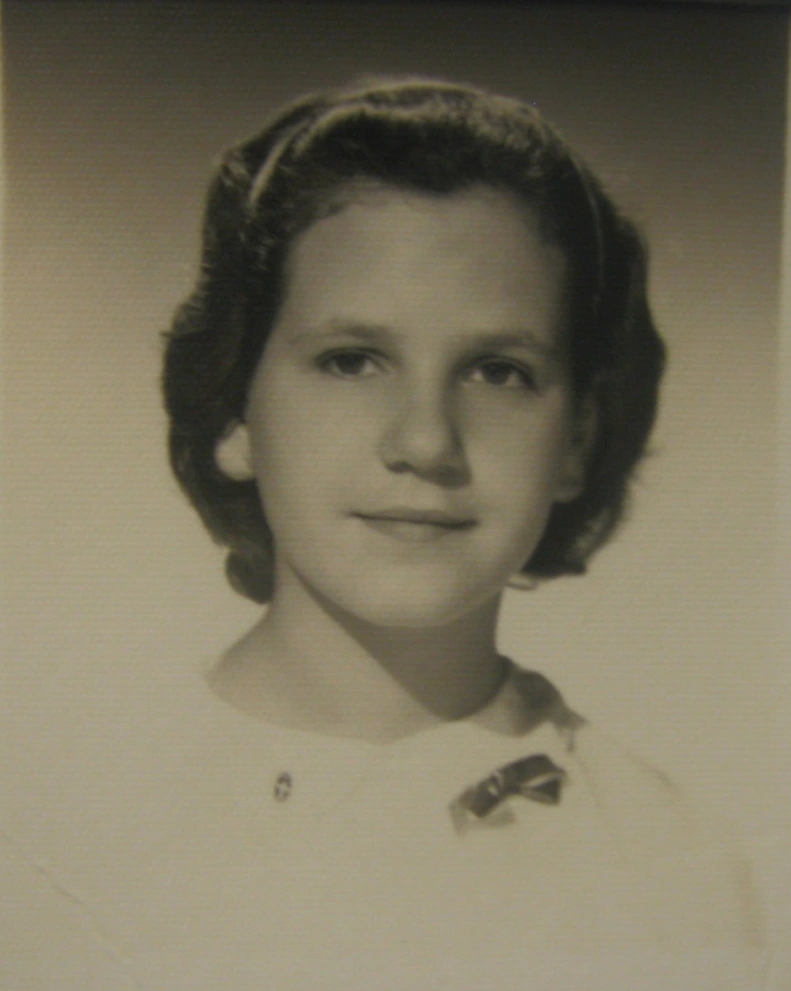
I woke up early on July 4, 1961.
I watered the black bean seedlings I had planted in a round clay pot a few weeks before. I asked my parents, Carlos and Augusta, to take care of them.
That day we finished packing my suitcase. I remember Mom insisted that I take a thick pink sweater and a yellow vinyl jacket. (Although this was July, I was travelling north and therefore I had to take them to protect me from the cold.) I must have said goodbye to my brothers Francisco Javier and Alejandro. When I have asked them decades after they tell me they don’t remember. My brother Carlos Alberto, the eldest, was already married and did not live with us in the third floor apartment of the building in Miramar, a suburb of La Habana, where we resided with our parents.
I had found out the day before that I had been granted a visa waiver. In the words of my Mom, which I still hear as an echo from the past, “conseguida a través de eso que llaman Operación Pedro Pan.” (“Obtained through what they call Operación Pedro Pan.) Some who have heard me say this have told me that it is impossible that my Mom would have said that because the name was a secret. I always reply, yes, it was secret for the press and for most of the general public. But my Mom knew it and she told me. Perhaps because in Cuba, and in any other country, it is difficult to keep such secrets secret.
When my Mom told me that I was leaving in the ferry for the United States, I was at our neighbor’s house. The neighbor had offered to give me a white bunny and my parents had given me permission to accept it.
Since the end of March of that year I had stopped attending school. Almost all my friends from the Colegio de las Ursulinas had left Cuba. (In Spanish “colegio” means “school” not college.) I missed my friends and the school which had been closed by the government as part of its complete revamping of the educational system in the island. In the midst of that boredom and loneliness the black bean seedlings kept me entertained and the white bunny would accompany me. I had to leave them.
Leaving my parents, my three brothers, and Cuba was the most difficult thing I had ever done. The J.R. Parrot ferry originally transported train cars filled with merchandise and now that the United States had severed diplomatic relations with Cuba, it only transported people. As the ferry left the port of La Habana at about noon, y gazed at the Morro Castle until it disappeared in the horizon. The plan was for me to meet my friend Ofelia and her family, who had left Cuba a year before, and stay with them for no more than a year. Nevertheless I wanted to have the image of the Morro seared in my memory for it represented the homeland where I had been born thirteen and a half years before.
The ferry arrived in West Palm Beach at noon on July 5th. Elenita, a friend of my family who now resided in that city, welcomed me at the port of Palm Beach. It was a hot day and she offered me a cold Coca Cola. I drank it all and it quenched my thirst. (Thank goodness the coats that my Mom had insisted I take were in the suitcase and not on me.)
Her cousin, also named Elena, drove me in her car to the Northeast section of Miami, to the home of some of my relatives. It would be a week before they were able to take me to my friend Ofelia’s house.
That evening my relatives took me for a walk to a nearby shopping center. I saw a Walgreens for the first time in my life. We then walked to a store similar to a Woolworth’s that we had in Habana. There I saw for the first time two water fountains, one with a sign that said “Colored” and the other with a sign that said “Whites.” I also saw similar signs on the bathrooms. I asked my relatives what the signs meant and why they were there. Although I don’t remember how they answered then, the signs were engraved in my memory.
So much has happened and so much has changed in these 62 years. The plan to return to Cuba in a year never happened. My adolescent dream of receiving an education and then return to Cuba to help there never came true. I had to change all my plans, the important as well as the insignificant ones.
Sadly, Cuba has not changed. Sixty two years later, there are still Cubans on the island desperate to emigrate because the conditions there worsen by the day. Families continue to become separated.
In the United States, the country that welcomed me, there have been changes in these 62 years. The Jim Crow laws changed and there have been changes in civil laws. There are no more signs separating Colored from Whites in bathrooms and water fountains. Although much remains to be improved, there has been change for the better. The nation has progressed. In “The Hill We Climb,” the American poet Amanda Gorman refers to the United States as “a nation that isn’t broken, but simply unfinished.” Paraphrasing the young poet laureate, a poem about Cuba would be called “The Hill We Descend” and we would refer to the island as “a broken nation, each time more destroyed.” Instead of progressing, Cuba has regressed.
Although I have never been back to Cuba, not even for a visit, I do “return” each time I hear the stories of people who have visited the island at different times throughout these six decades, when I see the photos they have taken, and when I read books by people who have lived there much longer than I did. I “return” each time I hear the stories of those who continue to arrive from the island.
I also return to Cuba in my memories, especially in days like today when I recall the day I left, and remember the black bean seedlings in the clay pot and the white bunny my neighbor had given me.
________________
I give thanks to God and to all who have made it possible for me to live and thrive in this great nation, the United States, my adoptive country. At the same time I am concerned about the desperate situation of the thousands and thousands of people who are trying to leave Cuba, Venezuela, Nicaragua and Haiti through the new humanitarian parole program from the US government. This program admits 30,000 people from those four countries each month.
I wish for each and every one of them that make it to this country the same welcoming and good treatment that I received 62 years ago.
 Justice and Peace Shall Kiss
wow!! 77Everything You Ever Wanted to Know About Operation Pedro Pan and More
LikeLike