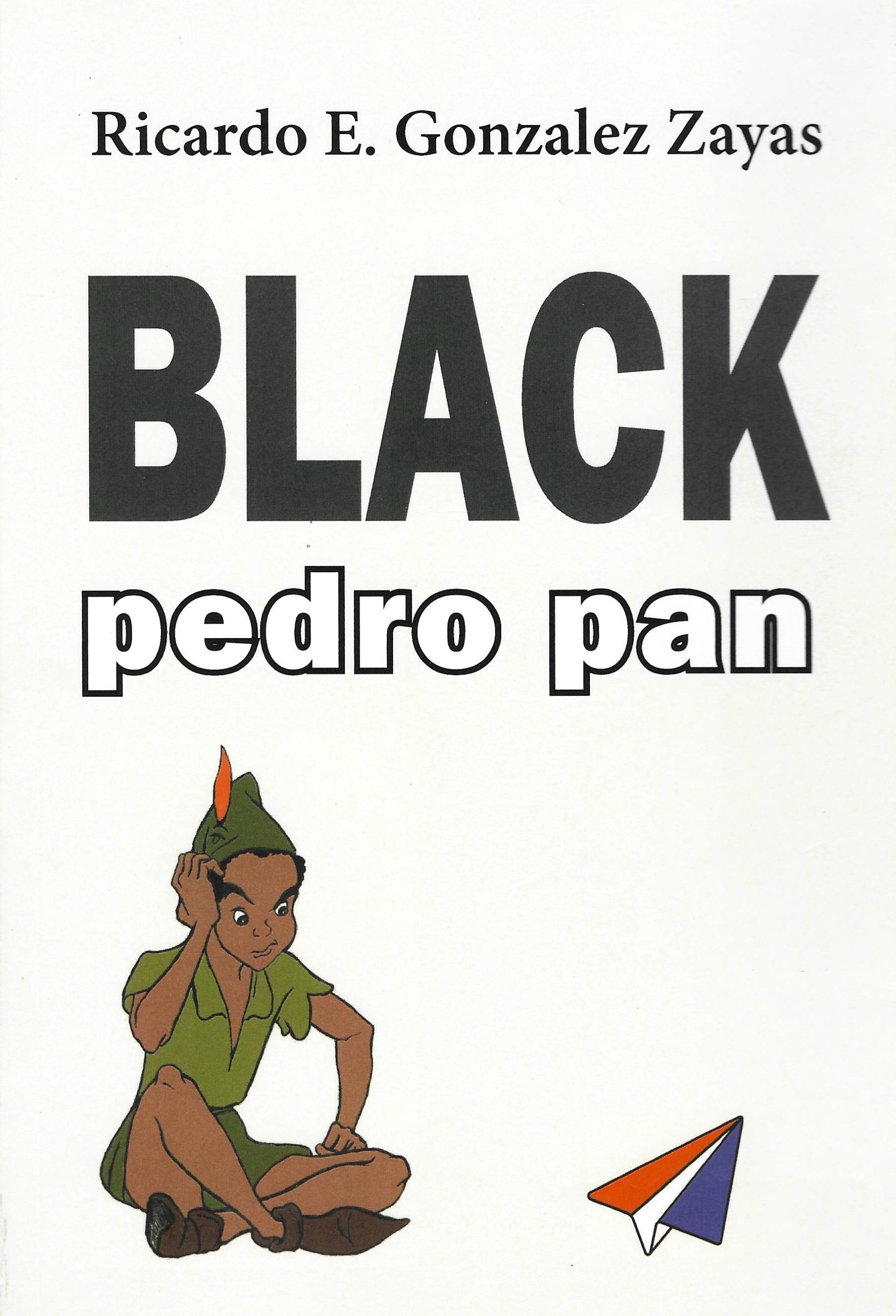
Black Pedro Pan is a good read for all
As summer ended in 1962 I rode alone on a Greyhound bus from Miami, Florida to Dallas, Texas. I was a 14 year old Cuban girl who had left Cuba the year before thanks to Operation Pedro Pan, a program that resettled unaccompanied Cuban children fleeing Castro’s communism. As we stopped at a bus station for a lunch break midway through the trip I noticed that all the black passengers stayed seated on the back of the bus. I asked why they were not getting off. “We are not allowed in the restaurant,” an older lady replied. I was extremely saddened when I heard this.
Unbeknownst to me, probably less than a year later, a fourteen year old Cuban boy, who had also left Cuba thanks to Operation Pedro Pan, found himself being told to seat in the back of a Miami city bus. Ricardo Gonzalez Zayas, one of a handful of black teenage boys staying at the Florida City shelter for unaccompanied Cuban children, narrates this incident in his memoir, Black Pedro Pan. He recalls that he had been given permission to ride a bus to visit a former neighbor from his hometown of El Cotorro, a municipality in the province of Havana, who had recently arrived in Miami and was residing near the shelter. When he got on the bus, the bus driver, a “red-faced white man” told him something that he did not understand since he was just starting to learn English. He stood in place until he heard the voice of another bus rider who translated for him the command of the bus driver. “At the time, I could not process what had happened but soon I learned that I had, for the first time, come face-to-face with the naked, ugly mug of racism as it was practiced in Miami and the United States in 1963.” (p. 55)
As a white Cuban, I had witnessed the ugly face of racism. As a black Cuban, Ricardo experienced it in his own person. He is right on the mark when he states that “Black Cuban exile is not the same as white Cuban exile…” (p.13). This point is brought out throughout the book. One of the most dramatic instances occurred in 1966 after his parents arrived in Miami. He went with them to rent an apartment in Little Havana at a building managed by a Cuban exile. A friend who knew the manager had told them that there was an apartment available for them. When the manager saw the color of their skin he refused to rent them the apartment. Ricardo was aware that recent laws had prohibited discrimination in housing. He confronted the manager and informed him he would call the authorities if he did not let them rent the unoccupied apartment. He reluctantly allowed them to rent an apartment in the building.
Ricardo writes: “After that regrettable experience it became clear that, going forward, our lives would be shaped in unforeseen and unpredictable ways by the color of our skin and, more importantly, we should be alert to that sort of prejudice even from those who, like us, had fled the island supposedly running away from injustice.” (p.73)
After pointing out the different exile experience that Ricardo had because of his race, I also have to note that in all other aspects his experience was the same as that of all the other unaccompanied minors that participated in Operation Pedro Pan. I enjoyed reading about his extended family in Cuba and perfectly identify with the experience of the family division – the “cracks”– that the Revolution caused. We can feel the anguish his parents felt in making the decision to send him to the United States, and it reminds us of the anguish our own parents felt. Of course, in his case, his parents were aware of the racial injustice that prevailed in the United States and this made their decision much more difficult to make. As many of our parents, his were certain that the separation would be only for a short period of time.
I loved reading his description in the “fish bowl” at the Rancho Boyeros airport, the room that separated by a thick glass wall the passengers who were waiting to board the airplane from the relatives that were staying on the island. One of the most poignant narratives in the book is that of his arrival at the Miami airport with the two sisters and little brother from a family of his hometown that his parents had happened to meet at Rancho Boyeros that same morning. Expressing how he felt during his first few days in Miami Ricardo writes:
“The reality of my new life and new surroundings, combined with the tremendous sense of separation from my parents and everyone and everything I knew, hit me with the force of a sledgehammer. I missed my old life terribly…. I wanted to go back to Cuba. ” (p. 49)
I felt the force of that sledgehammer on my first night in the United States – and I am sure many other Pedro Pan children felt the same way.
As time passed, with the help of the staff at the shelter and the new friendships he made Ricardo gradually assimilated into his new life. He reunited with his parents in Miami while he was attending high school. He graduated from Biscayne College, also in Miami and worked with the Travelers Insurance Company for many years. He returned to Miami and worked for the municipal government. He is now retired and lives in northeast Florida with his wife Mariana.
Gonzalez Zayas has travelled to Cuba many times, initially to visit his large extended family that stayed behind. I thoroughly enjoyed his detailed accounts of each of his visits. They give a glimpse of what life is like in communist Cuba. It also gives us a close up look of what black Cubans have experienced throughout the different stages of the Revolution.
I was fortunate to attend a book presentation of Black Pedro Pan at the American Museum of the Cuban Diaspora in Miami on September 3. The large room was packed with friends of Ricardo from the camps, from high school, and from many other organizations. As each spoke during the Q & A session the audience could sense the strong bonds of friendship that still exists between them and Ricardo. In answer to a question he explained that he does not name the persons in his book, or the places that discriminated against him because he is not writing to accuse anyone in particular. His purpose is not to throw stones and get revenge. His purpose is a noble one. Recognizing the wrongs done is necessary to heal the wounds they cause lest they fester in the dark. This is a necessary step for the healing of our societies from the evil of racism – not just in the United States, but also in Cuba.
Black Pedro Pan is a beautifully written book. It is easy to read. I found myself pausing often to feel fully the many poignant moments and at other times to reflect on Ricardo’s wisdom. Of course this book is of special interest to all who participated in Operation Pedro Pan including their counsellors, teachers and house parents and to Cubans who arrived in Miami in the sixties and subsequent decades. It should also be of interest to white and black Americans who have interacted with the Cuban community whether in the United States or in Cuba.
Above all Black Pedro Pan should be of interest to those who are dedicated to fostering racial justice in the continent or on the island. In today’s world that should include us all.
 Justice and Peace Shall Kiss